
Musa Butterfly Ranunculus (5 Corms)
Musa Butterfly Ranunculus (5 Corms)
Ranunculus Butterfly™ Musa®
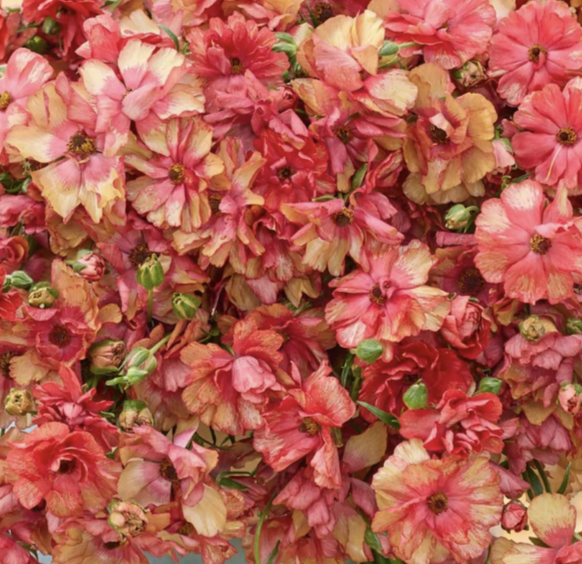
Ranunculus Butterfly™ Musa® corms produce gorgeous salmon-coral blooms on tall, branching stems, with multiple flowers and buds developing on each stem. Musa is especially distinctive for its fuller, more densely petaled flowers, giving it a lush appearance while still maintaining the graceful, airy quality that makes Butterfly ranunculus so desirable.
Part of the specialty Ranunculus Butterfly™ series, Musa produces branching stems carrying multiple blooms at different stages of opening. The buds emerge in deeper red and salmon tones before opening into beautiful warm salmon-coral flowers, creating wonderful variation and interest on a single stem.
The blooms have a lighter, more open appearance than traditional ranunculus, giving them wonderful movement in the garden and in floral arrangements. Their branching stems, excellent productivity, and unique flower form make Natura Moderna ranunculus an exciting addition to the spring cutting garden.
How to Grow Natura Moderna Butterfly Ranunculus from Corms
When to Plant Butterfly Ranunculus Corms
Butterfly ranunculus are cool-season flowers and perform best when allowed to establish and grow during periods of cool weather.
In mild climates, corms can be planted in fall for late winter and spring flowers. In colder climates, Butterfly ranunculus corms are generally started in late winter or early spring and planted outdoors with protection once conditions allow.
These plants prefer cool growing conditions and may begin to slow as temperatures become consistently warm.
How to Prepare Butterfly Ranunculus Corms for Planting
Dormant ranunculus corms naturally arrive small, hard, dry, and claw-like. This is completely normal.
Before planting, soak the corms in room-temperature water for approximately 3–4 hours. They will begin to plump as they absorb moisture.
Corms can then be planted directly or pre-sprouted to encourage root development before planting. To pre-sprout, place soaked corms in lightly moist potting mix and keep them in a cool location for approximately 10–14 days. Check periodically for root development and remove any corms showing signs of rot.
How to Plant Butterfly Ranunculus Corms
Plant corms approximately 1–2 inches deep with the pointed "claws" facing downward. Butterfly ranunculus appreciate more room than many traditional ranunculus varieties, so allow approximately 8–12 inches between plants.
Choose a location with full sun to part sun and fertile, exceptionally well-draining soil. Good drainage is especially important for ranunculus, as corms can rot when kept excessively wet.
In colder climates, frost cloth, low tunnels, or an unheated greenhouse can provide additional protection during periods of severe cold.
Watering & Caring for Butterfly Ranunculus
Water thoroughly after planting and then keep the soil lightly and consistently moist without allowing it to become waterlogged. Avoid excessive watering while the corms are establishing.
Once actively growing, Butterfly ranunculus appreciate consistent moisture, good air circulation, and cool temperatures.
Because these plants develop tall, branching stems carrying multiple flowers, support netting is highly recommended. Providing support early in the season helps keep stems upright and protects them from wind and heavy spring weather.
When Do Butterfly Ranunculus Bloom?
Bloom time varies depending on climate, planting date, and growing conditions. Butterfly ranunculus perform best during cool spring weather and can produce an abundance of flowering stems once established.
Unlike traditional ranunculus, Butterfly ranunculus produce multiple flowers and buds on each branching stem. This creates an airy spray of blooms rather than a single large flower.
For cut flower production, harvest stems as the first flowers begin to open while additional buds remain on the stem. The remaining buds can continue opening in the vase, creating a beautiful and constantly changing display.
Growing Butterfly Ranunculus in Cold Climates
In colder growing zones, Butterfly ranunculus are typically treated as cool-season annuals rather than reliably winter-hardy perennials.
Starting corms in a protected environment in late winter gives plants an opportunity to establish before they are planted outdoors. Once established, ranunculus tolerate cool spring conditions well, although protection may be necessary during periods of extreme cold.
What to Expect When Your Butterfly Ranunculus Corms Arrive
Don't be concerned if your Butterfly ranunculus corms look small, dry, hard, and wrinkled when they arrive. Dormant ranunculus corms naturally look this way.
After soaking and planting, the corms begin developing roots and foliage before eventually producing their distinctive branching flower stems.
Natura Moderna Butterfly ranunculus are a wonderful choice for gardeners and flower growers looking for something different from traditional ranunculus. Their tall stems, multiple blooms, graceful movement, and exceptional value as cut flowers make them a truly special addition to the spring cutting garden.